

If you're wondering, "What is my home worth in Stamford, CT?" you may be thinking about selling, planning a move, or simply checking how your property's value has changed. While online calculators can provide a starting point, understanding your home's potential market value requires a closer look at local sales, property features, and current buyer demand. You can begin by exploring the local real estate information available through VantagePoint Properties to understand the Stamford market and the factors that may affect your property.
A home's value is not determined by square footage or the number of bedrooms alone. Two properties that appear similar on paper may attract different offers because of their condition, location, layout, updates, and surrounding competition.
Stamford has a diverse housing market, ranging from downtown condominiums and townhomes to single-family houses in established residential neighborhoods. Each property type appeals to different buyers, which makes a property-specific assessment more useful than relying on a citywide average.
Here's how to estimate what your home may be worth, understand the information behind a valuation, and decide when a more detailed market analysis makes sense.
1. What Determines Your Home's Value in Stamford?
Your home's market value is an estimate of the price it could reasonably sell for under current market conditions. It reflects what buyers are willing to pay for a property like yours, considering the available alternatives.
Several factors contribute to that estimate.
Location and neighborhood: Buyers may consider transportation access, nearby amenities, the character of the street, and the surrounding properties. Even homes in the same general area can differ in value because of their immediate setting.
Property size and layout: Finished living space, bedroom and bathroom count, storage, and the flow between rooms all influence how useful a home feels to potential buyers.
Overall condition: The condition of the roof, windows, heating system, plumbing, and other major components can affect buyer confidence. Visible maintenance issues may also influence how buyers evaluate the property.
Renovations and upgrades: Updated kitchens, bathrooms, flooring, and outdoor areas can improve appeal. However, the value added by an improvement depends on the quality of the work and what similar homes offer.
Parking and outdoor space: Garages, driveways, patios, decks, and usable yards may be important to certain buyers, depending on the property's type and location.
Market conditions: Interest rates, available inventory, and the number of active buyers can influence competition and the prices sellers receive.
No single factor determines the final value. The most useful estimate considers how these elements work together.
2. Review Recent Comparable Home Sales
One of the strongest starting points for a home value estimate is a review of comparable properties, commonly called comps. These are homes similar to yours that have recently sold.
Completed sales provide evidence of what buyers have actually paid. Active listings are also useful, but their asking prices show what sellers hope to receive rather than what buyers have agreed to pay.
When comparing properties, look at:
- Location and neighborhood characteristics.
- Property type, including whether it is a condominium, townhome, or single-family house.
- Finished square footage and layout.
- Number of bedrooms and bathrooms.
- Property condition and recent improvements.
- Parking, outdoor space, and other relevant features.
- Date of sale and the market conditions at that time.
Choose comparisons carefully
Imagine you own a three-bedroom house in Stamford with an updated kitchen and a well-maintained backyard. Another nearby house may have the same bedroom count, but if it needs significant repairs or has a different layout, its sale price may not provide a reliable comparison.
Likewise, a renovated property may have sold for more because it offered features buyers valued. That does not automatically mean your property should receive the same price.
Ideally, review several recent sales rather than relying on one transaction. A group of relevant comparisons can reveal a more useful range and help explain why some homes sell for more than others.
3. How to Calculate Your Home's Value
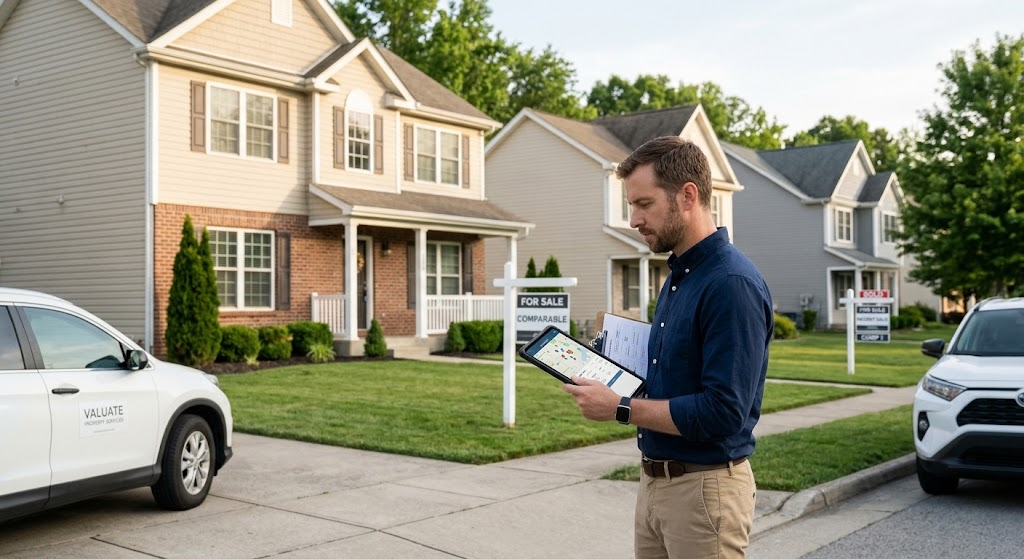
If you want to understand how to calculate home value, begin with recent comparable sales and assess the differences between those properties and yours.
First, identify three to five similar homes that have sold recently. Record their sale prices, sizes, condition, and key features. Then look at the overall price range and consider which properties most closely resemble your own.
For example, suppose three broadly comparable properties sold for $760,000, $785,000, and $800,000. Their average sale price is approximately $781,667.
That figure is a useful reference point, but it is not automatically your home's value. Your property may be larger, better maintained, differently located, or missing features found in the other homes.
Price per square foot can provide additional context. Divide a property's sale price by its finished square footage to see how it compares with other homes. However, avoid multiplying an average price per square foot by your home's size and treating the result as a final valuation.
Smaller properties may have a higher price per square foot than larger ones, and square footage does not capture every difference in quality, layout, or condition.
A calculation helps organize the evidence. Choosing relevant comparisons and interpreting their differences is what makes the estimate useful.
4. Are Online Home Value Estimates Accurate?
Online home value tools can be convenient when you want a quick estimate without arranging a property visit. Depending on the tool, the calculation may use public records, property characteristics, nearby sales, and other available information.
These estimates can help you begin your research, but they should not be treated as guaranteed selling prices.
An automated system may not know that you recently renovated your kitchen, replaced the roof, improved the landscaping, or discovered a maintenance problem. Public records may also be incomplete or outdated.
For example, an online tool might estimate your home at $850,000. That number may be a useful starting point, but it needs to be checked against recent sales and the specific characteristics of your property.
Compare estimates with homes that genuinely resemble yours. If the suggested value appears unusually high or low, investigate the properties and assumptions behind it.
For important decisions, consider a local comparative market analysis. A real estate professional can review the home's features, recent transactions, and current competition to develop a more tailored estimate.
5. How Stamford Neighborhoods Influence Home Value
Stamford includes neighborhoods with different housing styles, amenities, and buyer priorities. These differences can influence how a property is valued.
Downtown condominiums may attract buyers who prioritize transportation, restaurants, shops, and a more urban lifestyle. Building amenities, parking arrangements, and homeowners association fees may also affect a buyer's decision.
In areas such as North Stamford, buyers may focus more on lot size, privacy, outdoor space, and the layout of a detached house. In other parts of the city, commuting convenience, neighborhood character, or proximity to local services may be more important.
These are general patterns rather than fixed rules. Individual buyers have different priorities, and a home's condition and features still matter.
For a better understanding of the areas around the city, explore Stamford neighborhoods and communities. When estimating your home's value, use neighborhood information alongside actual comparable sales rather than assuming every property in the same area should have a similar price.
The most relevant comparisons are the homes buyers would realistically consider as alternatives to yours.
6. Do Renovations Increase Your Home's Value?
Renovations can make a property more attractive, but the amount you spend does not automatically translate into an equal increase in market value.
An updated kitchen, modern bathroom, fresh paint, or improved outdoor area may appeal to buyers. Necessary maintenance can also help address concerns that might otherwise affect negotiations.
However, the impact depends on the property's original condition, the quality of the work, and the features of competing homes.
For example, replacing a failing roof may reduce a significant concern for buyers. A luxury bathroom renovation may improve the home's appearance, but some buyers might not be willing to pay enough extra to cover the entire cost.
Before starting an expensive project, ask whether it addresses a genuine weakness compared with similar properties. Consider whether simple maintenance or cosmetic improvements would be sufficient.
If you're thinking about selling, the information and guidance on preparing and selling your home can help you consider how property presentation and pricing fit into the wider selling process.
7. Understand Market Value Versus Home Equity
Market value and home equity are related, but they describe different things.
Market value is an estimate of what your property might sell for. Home equity is the difference between the property's current value and the outstanding mortgage balance, along with any other liens that may apply.
Suppose your home has an estimated market value of $850,000 and you owe $400,000 on your mortgage. Your estimated gross equity is $450,000 before selling expenses and other obligations.
Your actual proceeds from a sale may be lower after expenses such as brokerage compensation under your agreement, attorney fees, closing costs, agreed concessions, and mortgage payoff charges, if applicable.
This distinction matters if you're considering downsizing, relocating, buying another property, or using the proceeds for another financial goal.
A home valuation can help you understand your financial position, but it should not be confused with the amount you would receive after closing. Estimate selling costs separately before making plans based on your equity.
8. When Should You Get a Professional Home Value Estimate?
An online estimate may be enough if you're simply curious about your home's value. A property-specific assessment becomes more useful when you're preparing to make a significant decision.
Consider a professional market analysis if you're:
- Planning to list your home in the coming months.
- Deciding whether to sell or stay.
- Considering a move to a different property.
- Evaluating the potential benefit of renovations.
- Trying to understand why your property differs in value from nearby homes.
A real estate professional can review recent comparable sales, competing listings, property condition, and features that may not be fully reflected in public records.
A comparative market analysis typically helps establish a reasonable listing-price range. It is not the same as a formal appraisal completed by a qualified appraiser for a lending or other specific purpose.
If a lender or another formal process requires an appraisal, confirm the requirements with the relevant professional.
The right valuation method depends on your goal. A homeowner considering a future sale may need a different level of detail from someone who requires a formal appraisal.
9. Common Mistakes When Estimating Home Value

A few common assumptions can lead homeowners to overestimate or underestimate their property's worth.
Using asking prices as proof of value. A listing price reflects what a seller hopes to receive. Completed sales provide stronger evidence of what buyers have paid.
Comparing different property types. A downtown condominium and a detached house may have different features, expenses, and buyer pools. Keep your comparisons relevant.
Adding renovation costs directly to value. Spending $50,000 on improvements does not automatically increase a home's market value by $50,000.
Relying on a single online estimate. Different tools may use different datasets and methods. Compare the result with other evidence.
Ignoring current competition. New listings and price reductions can change the choices available to buyers. An estimate should reflect current conditions.
Confusing equity with sale proceeds. Your mortgage balance is only one part of the financial picture. Selling costs and other obligations affect what you ultimately receive.
Avoiding these mistakes can help you approach valuation with realistic expectations rather than relying on a single number.
10. What Should You Do After Estimating Your Home's Worth?
Once you have a reasonable estimate, decide how you intend to use it.
If you're monitoring your property's value, keep records of significant improvements and review relevant sales periodically. If you're considering selling, evaluate the home's condition, compare competing properties, and establish a realistic asking-price range.
If your next step may be purchasing another home, think about your likely budget, timeline, and housing needs before making commitments. You can explore the homebuying process and buyer resources to understand the decisions involved in planning your next move.
For a potential sale, a property-specific market analysis can turn a broad estimate into a practical pricing plan. It should consider the evidence supporting your home's value, the alternatives available to buyers, and any factors that could affect demand.
Remember that an estimate is a snapshot rather than a permanent figure. Market conditions and property circumstances can change, so revisit the analysis when you're preparing to make a major financial decision.
Conclusion
If you're asking what your home is worth in Stamford, CT, the most reliable answer comes from evaluating your property in context. Recent comparable sales, neighborhood characteristics, condition, renovations, and current buyer demand all help explain what a buyer may be willing to pay.
Online tools can provide a useful starting point, but they cannot always account for the details that make your home different. Combining initial research with a local, property-specific analysis can give you a clearer picture of its potential value.
If you're ready to discuss your property's value or explore your next steps, you can contact VantagePoint Properties to ask about a market analysis tailored to your home.
Frequently Asked Questions
How can I find out what my home is worth in Stamford, CT?
Start by reviewing recent sales of similar homes in your neighborhood. Consider property size, condition, layout, and features, then compare the results with current listings. A local real estate professional can prepare a more detailed comparative market analysis.
Are online home value estimates accurate?
Online estimates can provide a useful starting point, but their accuracy varies. Automated tools may not account for renovations, property condition, layout, or street-level differences. Compare the estimate with recent sales and other relevant information.
Does my Stamford neighborhood affect my home's value?
Yes. Location can influence buyer demand, access to amenities, transportation, and the types of properties available nearby. However, individual property features and recent comparable sales are also important.
Will renovations increase my home's value?
Some improvements can increase buyer appeal or address maintenance concerns, but the value added may be less than the cost of the work. Compare similar renovated and unrenovated homes before committing to major projects.
Is a home value estimate the same as an appraisal?
No. A comparative market analysis estimates a likely selling-price range using market evidence. A formal appraisal is a separate valuation process completed by a qualified appraiser for a specific purpose.
Check out this article next

